Osaka to Kyoto Local Market Food Tour by Charter Bus
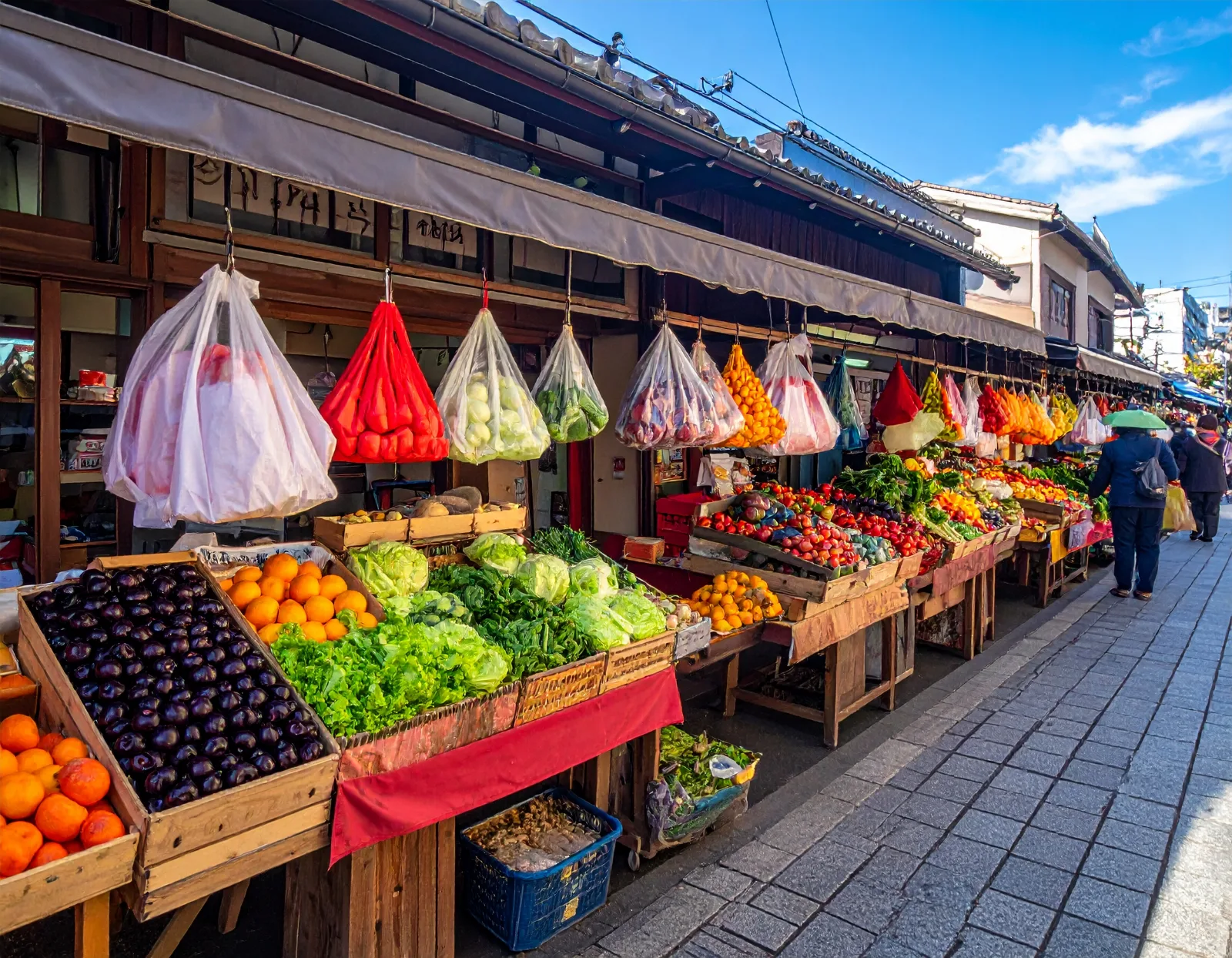
Plan a One-Day Charter Bus Tour Across Osaka and Kyoto's Local Markets
Osaka and Kyoto sit close enough that a private charter bus can connect their best-known food markets in a single day. By highway, the drive between the two cities takes about an hour, with a toll of roughly ¥3,000 each way. That short travel time is what makes it realistic to combine a morning at Kuromon Market in Osaka with an afternoon walk through Nishiki Market in Kyoto, without the day feeling rushed.
The advantage of a charter bus over public transport is control over timing. A guided walking tour has to keep every visitor on the same schedule, but a private bus lets your group decide how long to linger at each stop -- more time for the seafood stalls at Kuromon, a shorter pass through Nishiki if your group already has a Kyoto temple visit planned for later. Every itinerary is quoted individually based on group size and the stops you choose, so it's worth requesting an estimate before finalizing your route.
Tell us your route and party size.
Get a Free Quote ▶
Kuromon, Nishiki, and Tsukiji: Where Can a Large Bus Actually Park?
Not every famous market is built for large-vehicle access, and this is the detail that trips up first-time group organizers. Tokyo's Tsukiji Outer Market is actually the easiest of the three: a dedicated coach parking lot, Ichiba-bashi, sits right by the market, holds up to nine large buses, operates from 9:00 to 17:00, and takes reservations in advance (cash payment only on-site).
Osaka's Kuromon Market is a different story. The parking facilities near the market -- the kind found on ordinary parking-lot apps -- are typically limited to vehicles under about 2.0-2.1 meters in height and roughly 5 meters in length, which rules out a large sightseeing coach. In practice, this means the bus parks at a nearby lot built for larger vehicles, and the group walks the final stretch into the market on foot.
Kyoto's Nishiki Market has the same constraint for a different reason: it's an arcade street running about 400 meters between Teramachi and Takakura, lined with roughly 130 shops. Kyoto's own tourism authority doesn't recommend bringing large vehicles into the surrounding downtown streets because of traffic congestion, and the arcade itself was never designed for coaches to pull up alongside it. For both Kuromon and Nishiki, the itinerary needs a clear drop-off point and a walking route planned in advance -- something we work out with every group before the day of travel.
Group Logistics: Luggage, Timing, and Meeting Points for 20-45 Travelers
A market visit with 20 to 45 people moves differently than a couple wandering on their own. The biggest practical question is what to do with luggage. As a rough guide, a small bus suits a light day trip with minimal bags, while a mid-size or larger bus is the better choice once suitcases are involved -- bulky items don't belong on a market-hopping itinerary where the group will be walking narrow aisles for an hour or two at a stretch.
Because individual shops inside a market set their own opening hours, it helps to build in extra time before the group needs to reassemble. A meeting point that's easy to describe without a guide present -- a specific gate, a landmark shopfront, the entrance where the bus dropped everyone off -- keeps a large group from scattering too far or losing track of the departure time. This kind of detail matters more for a school trip, a company outing, or a multi-generation family trip than it does for a solo traveler, and it's exactly the sort of planning built into the itinerary alongside the drive time and parking arrangements above.
Beyond the Big Three: Uonotana Market in Akashi, Hyogo
Kuromon, Nishiki, and Tsukiji get most of the attention, but Hyogo Prefecture has its own version worth adding to a Kansai itinerary. The Uonotana shopping street in Akashi traces its roots back roughly 400 years to the building of Akashi Castle, and today around 100 shops line the street, many of them selling the day's catch straight off the boat -- Akashi sea bream and Akashi octopus are the local specialties, and most stalls will sell a single piece rather than requiring a bulk purchase, which makes it an easy stop for casual food sampling.
Akashi Station, served by both JR and the Sanyo Electric Railway, is about a five-minute walk from the market, which keeps the drop-off simple for a bus group. For a Kansai-based trip that already includes Osaka or Kobe, adding Uonotana as a half-day extension is a way to give visitors a market experience that feels more local and less crowded than the well-known Osaka and Kyoto stops.
Market Hours and Closing Days Vary by Shop, Not by the Whole Market
One detail that catches groups off guard: none of these markets close as a single unit. Kuromon Market is generally active from around 9:00 to 18:00, but that's an average -- individual shops set their own hours, and there's no single day when the whole market shuts down. Nishiki Market works the same way, with each shop choosing its own hours and rest days; a noticeable number close on Wednesdays, but that's a tendency, not a rule that applies market-wide.
The practical takeaway is to build some slack into the schedule rather than planning a tight, back-to-back itinerary. If a particular stall or shop is the reason your group wants to visit a market, it's worth confirming that shop's hours specifically rather than assuming the market as a whole keeps one set schedule.
Get a Custom Quote for Your Market-Hopping Itinerary
A market tour can be built around almost any combination -- a straightforward Osaka-and-Kyoto day trip, or a route that adds Akashi's Uonotana for something less crowded, with the number of stops and the size of the bus adjusted to your group. Every quote is calculated based on your group size and the itinerary you choose, so the best next step is to share your rough plan and get a specific estimate back.
Please note that a Japanese-speaking party leader must accompany the group on board, as this is a charter bus arrangement rather than an English-language guided tour.
