Izumo Taisha & Matsue: A San'in Group Tour Bus Itinerary
Should a Group Visiting Izumo Taisha and Matsue Choose a Day Trip or an Overnight Stay?
The right structure for a group tour depends on how much time the group wants to spend on the road versus inside Izumo Taisha, Matsue, and the Adachi Museum of Art. Traveling from Osaka, Izumo Taisha sits roughly five hours or more away by charter bus, so building the whole visit around a single round trip in one day leaves comparatively little time to enjoy the shrine, the castle town, or the gardens once everyone arrives. For this kind of distance, an overnight stay is usually the more comfortable choice, since it protects sightseeing time rather than spending most of the day on the road. A day trip is still workable for a group that wants to focus on just one or two of the three main stops rather than trying to fit all three in. It's also worth remembering that a chartered group bus runs on a different clock than a solo car trip or train connection — rest stops, boarding, and group check-ins all add time that a point-to-point travel-time estimate doesn't capture, so itineraries should always be built around realistic, measured travel times rather than theoretical ones.
How Long Does It Take to Reach Izumo Taisha by Charter Bus from Osaka?
From Osaka, a daytime highway bus takes about 5 hours and 42 minutes, while an overnight bus service takes closer to 8 hours — distances that make a same-day return fairly demanding. Because a chartered bus serves an entire group rather than individual travelers, actual elapsed time shifts with how many rest breaks are built in and how long boarding and disembarking take at each stop, so these figures should be treated as a baseline rather than a fixed number.
A One-Day Charter Bus Itinerary Centered on Izumo Taisha
For a group working within a single day from Osaka, the distance leaves room to properly enjoy one real highlight rather than rushing between several. Izumo Taisha is the natural centerpiece of a trip like this, with a few unhurried hours at the shrine grounds before the group needs to start heading back. Tamatsukuri Onsen, a short drive from the shrine, pairs well as a second stop on the way home — a chance to stretch, eat, and unwind before the long return drive. Matsue Castle and the Adachi Museum of Art are both well worth seeing, but fitting either into the same day as Izumo Taisha from Osaka doesn't leave enough daylight to do them justice. Groups who want to take in all three sights are better served by spreading the visit across two days, as described below, rather than trying to compress it into one long day on the road.
A Two-Day Itinerary Combining Matsue's Castle Town and the Adachi Museum of Art
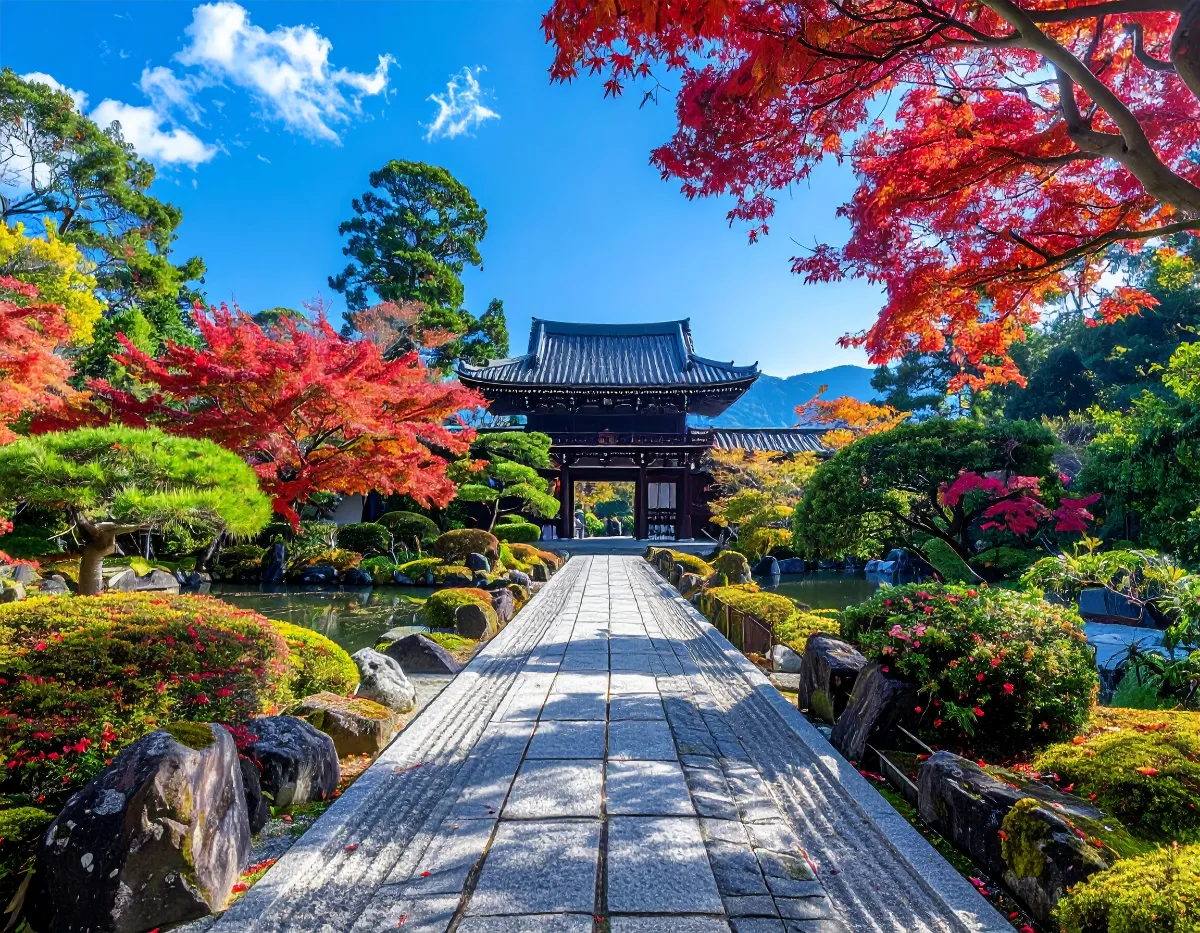
Spreading the visit across two days lets a group enjoy Izumo Taisha and Matsue's castle town on day one, then dedicate day two to the Adachi Museum of Art without the pressure of a long drive home the same evening. On day one, after the shrine, Matsue Castle and the Shiomi Nawate district — home to the former residence and memorial museum associated with the writer Lafcadio Hearn — sit within walking distance of each other, so a group can cover both without getting back on the bus. Matsue Castle's tower is one of just five surviving castle towers in Japan to hold National Treasure status, a rare distinction among Japan's historic castles. On day two, the Adachi Museum of Art's Japanese garden has long topped national rankings in the Journal of Japanese Gardening and is widely regarded as one of the finest gardens in the country, spread across roughly 50,000 tsubo — about 165,000 square meters — of grounds. Splitting the two days this way also eases the physical toll of long-distance travel, since the heaviest driving happens on day one and day two can move at a slower pace.
Rest Stops, Pickup and Drop-off Points, and Practical Tips for Planning a Group Bus Tour
Choosing the right service area for a rest stop matters more for a large group than it does for a car or two — a stop with ample parking for large buses and restrooms that won't bottleneck a group of forty or fifty makes a noticeable difference in how smoothly the day runs. Around Izumo-shi Station and Matsue Station, pickup and drop-off points that are used to accommodating large buses tend to keep boarding and disembarking quick and predictable. Building in extra time for boarding and alighting based on group size — rather than assuming everyone moves at the pace of a handful of travelers — keeps the rest of the itinerary from running behind. Whether the plan centers on Izumo Taisha alone, pairs it with Tamatsukuri Onsen, or stretches into the two-day structure that also takes in Matsue Castle and the Adachi Museum of Art, treating the schedule as a flexible frame rather than a minute-by-minute plan — leaving room for a group to linger a little longer wherever matters most to them — tends to work better than packing any single day too tightly. On-site coordination along the way is handled in Japanese, so having someone in the group comfortable communicating in Japanese can help smooth over any small questions that come up during the day. For groups departing from the Osaka area, it's also common to pair an early-morning departure with a stop at Osaka Castle or a stroll through Dotonbori the evening before, turning the trip into a fuller getaway around the long drive west.
Points to Note When Visiting by Group Bus During the Kamiarizuki Season in Autumn and Early Winter
The period known as Kamiarizuki, when tradition holds that deities from across Japan gather at Izumo Taisha, falls in autumn and early winter and brings noticeably heavier crowds to the area around the shrine. During that stretch of the season, travel time between Izumo City and the shrine itself has been known to stretch to two or three hours on the most heavily visited days, well beyond the usual pace. Groups planning a visit during this period should build extra time into the schedule around the shrine itself, rather than relying on the travel times used during quieter months, and should allow more room than usual for pickup and drop-off rather than keeping the same tight margins used in off-peak seasons. There's a particular stillness to arriving at the shrine in that crowded hush, the grounds fuller than at almost any other time of year — and it's not hard to see why so many groups choose to brave the extra time on the road for it.
A Japanese-speaking party leader must accompany the group on board.
