
2026-08-09
Charter Bus for Sports Teams & Tournaments in Japan
Charter Bus Coordination Handles Airport, Hotel, and Venue Transfers for Tournament Trips
When a school or club team arrives in Japan for a tournament, the biggest logistics question is usually not the match schedule -- it's how the group moves between the airport, the hotel, and the competition venue without losing time or splitting up. A single charter bus, or a small fleet for larger squads, can cover the full loop: pickup at the airport, transfer to the hotel, daily runs to the venue, and the return trip. As a travel agency, Tabinosuke arranges this kind of point-to-point sports logistics for you -- working out route planning, vehicle sizing, and equipment loading with the charter bus company before the team lands, rather than improvising on the day. This guide covers route and height checks, vehicle selection by equipment volume, multilingual coordination, booking timing, and what to add to the schedule between matches.
Height Restrictions and Vehicle Size to Check Before Your Airport-Hotel-Venue Route
Before finalizing a route between the airport, hotel, and venue, the vehicle's height needs to be checked against every bridge and overpass along the way. Regular roads in Japan generally allow large vehicles up to about 3.8 meters tall, while some routes marked as height-permitted allow vehicles up to 4.1 meters through. This matters because access roads near major transit hubs are not all built to the same standard -- the approach to Shin-Osaka Station's charter bus parking area, for example, runs under a rail overpass with a clearance of only 3.6 meters, so a high-decker coach fits through while a super-high-decker does not. The same kind of check applies to hotel driveways and stadium parking, where clearance and turning space vary by venue. Large international events bring this into sharper focus: the 2026 Asian Games in Aichi and Nagoya run from September 19 to October 4, and events of that scale typically involve detailed transport planning around each venue. Tabinosuke arranges transfers within Tokyo, Osaka, and the Kansai Airport area, so we can put together a route for teams staying or competing in and around those regions.
Choosing Between a Large Bus and a Microbus Based on Equipment Volume
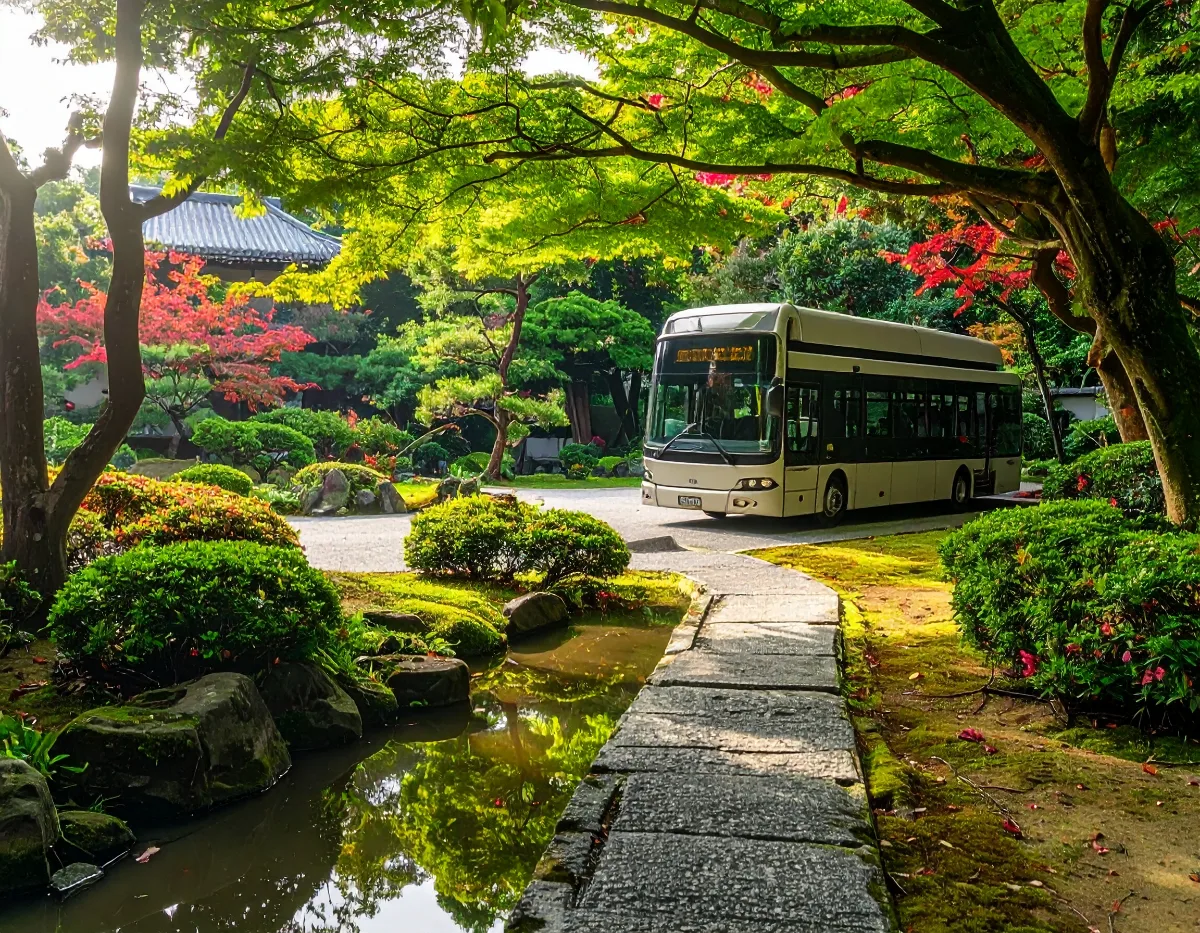
Team gear is usually the deciding factor in vehicle choice, more so than headcount alone. A large bus carries a separate, high-capacity trunk compartment below the passenger cabin, which comfortably holds bat bags, stick bags, cooler boxes, and other oversized equipment that won't fit on an overhead rack. A microbus, by contrast, often has little or no external trunk space, so bags typically ride inside the cabin with the players. For a team traveling with bulky equipment -- hockey and baseball squads in particular -- a large or mid-size bus is usually the more practical pick even if a microbus would technically seat the group. When we put together a quote, we size the vehicle around both the roster count and the equipment load, not headcount alone.
Multilingual Coordination, Interpreter Seating, and Transport Simulation
Language is the other variable that needs to be worked out before match day, not during it. For international tournament hosting, having an interpreter present and running through the day's movements in advance both go a long way toward keeping a group moving smoothly between venues. We recommend that a bilingual coordinator or interpreter rides with the group for at least the first transfer, and that pickup points, departure times, and any gate or check-in procedures at the venue are shared with the team and the driver ahead of time. Walking through the day's movements once before the team lands -- where the bus stages, how boarding works at the hotel, what happens if a match runs long -- removes most of the confusion that a language gap would otherwise cause on the day itself.
When to Book During Peak Season, and How Cancellations or Date Changes Work
Tournament season overlaps with Japan's busiest charter periods, so booking early gives you a much wider choice of vehicle size and pickup time. Charter bus pricing depends on your group size, route, and schedule, so we work it out as a formal quote for your itinerary rather than a flat published rate -- you can request one anytime at tabinosuke.com/estimate/. If a booking is cancelled or changed after confirmation, a cancellation fee applies based on how close to departure the change is made: 0% up to 21 days before, 20% from 20 to 8 days before, 30% from 7 to 2 days before, 40% the day before, and 100% on the day itself. Because tournament schedules sometimes shift, it's worth locking in the booking early and flagging any chance of a date change when you first request a quote.
Adding Hot Springs and Local Dining Between Matches
The time between the hotel and the venue doesn't have to be pure transit. Teams with a rest day or a gap between matches often build in a stop at a hot spring facility or a local restaurant on the way back from the venue, turning a transfer into part of the trip. A common pattern for groups landing at Kansai Airport is a run through Nara -- Todaiji Temple and Nara Park -- before continuing on to the hotel, or a Kyoto-based stay near Miyako Hotel Kyoto Hachijo paired with Togetsukyo Bridge, Tenryuji Temple, and the Sagano bamboo grove on a free afternoon. These additions work best when kept to a single, unhurried loop rather than a packed sightseeing list, so the team arrives at the next match rested rather than tired from the road. For a closer look at how a day like this fits together, see our model course pages linked below.

日本語版
日本におけるスポーツチーム・大会向け貸切バス
貸切バスの手配で空港・ホテル・会場間の送迎を一括管理
学校やクラブチームが大会のために来日する際、最大のロジスティクス課題は試合スケジュールそのものではなく、空港・ホテル・競技会場の間をチームが時間を無駄にせず、また分散することなくどう移動するかであることがほとんどです。貸切バス1台、あるいは大所帯のチームには小規模な複数台編成で、空港到着後の送迎からホテルへの移動、会場への毎日の送迎、そして帰路までの一連の流れをすべてカバーできます。旅行会社であるたびのすけは、このようなスポーツ団体向けの拠点間ロジスティクスを手配します----チームが到着した当日に即興で対応するのではなく、到着前にルート計画・車両サイズの選定・機材の積み込みについて貸切バス会社と詰めておきます。本ガイドでは、ルートと高さの確認、機材量に応じた車両選び、多言語対応、予約のタイミング、そして試合の合間にスケジュールへ組み込めることについて解説します。
空港・ホテル・会場ルートを確定する前に確認すべき高さ制限と車両サイズ
空港・ホテル・会場を結ぶルートを確定する前に、経路上のすべての橋梁や高架をチェックし、車両の高さと照合しておく必要があります。日本の一般道路では大型車両はおおむね高さ約3.8メートルまで通行可能で、高さ指定の一部ルートでは4.1メートルまでの車両が通行できます。これが重要なのは、主要な交通拠点付近のアクセス道路がすべて同じ基準で作られているわけではないためです。例えば新大阪駅の貸切バス駐車場へのアプローチは、高さ制限わずか3.6メートルの鉄道高架下を通るため、ハイデッカー車両は通行できてもスーパーハイデッカー車両は通行できません。同様のチェックはホテルの車寄せやスタジアムの駐車場にも当てはまり、高さ制限や旋回スペースは会場ごとに異なります。大規模な国際イベントでは、このことがより重要になります。2026年に愛知・名古屋で開催されるアジア競技大会は9月19日から10月4日まで行われ、この規模のイベントでは通常、各会場周辺の輸送計画が詳細に組まれます。たびのすけは東京・大阪・関西空港エリア内の送迎を手配していますので、これらの地域およびその周辺で宿泊・競技を行うチームのルートを組むことができます。
機材量に応じた大型バスとマイクロバスの選び方
車両選びを左右するのは、多くの場合人数だけでなくチームの荷物量です。大型バスは客室の下に独立した大容量のトランクスペースを備えており、バットバッグやスティックバッグ、クーラーボックスなど、頭上の棚に収まらない大型の機材も余裕をもって収納できます。一方でマイクロバスは車外トランクスペースがほとんど、あるいはまったくないことが多く、荷物は通常選手と一緒に車内に積み込むことになります。ホッケーや野球のチームなど、かさばる機材を伴うチームの場合、人数だけならマイクロバスに乗れたとしても、大型バスまたは中型バスの方が実用的な選択となるのが通常です。お見積りを作成する際は、人数だけでなく機材の量も含めて車両サイズを決めています。
多言語対応・通訳の同乗・移動シミュレーション
言語の問題も、試合当日ではなく事前に解決しておくべきもう一つの要素です。国際大会の受け入れでは、通訳を同行させることと、その日の移動を事前にシミュレーションしておくことの両方が、会場間の移動をスムーズに進める上で大きな効果を発揮します。バイリンガルのコーディネーターまたは通訳が、少なくとも最初の送迎には同乗することをお勧めします。また、乗車地点・出発時刻、会場でのゲートやチェックイン手続きについても、事前にチームとドライバーの双方に共有しておくべきです。バスがどこに待機するか、ホテルでの乗車方法はどうなっているか、試合が長引いた場合はどうするか----チームが到着する前にその日の動きを一度シミュレーションしておくことで、当日言語の壁によって生じるはずだった混乱の大半を取り除くことができます。
繁忙期の予約タイミングと、キャンセル・日程変更の仕組み
大会シーズンは日本国内の貸切バス需要が最も高まる時期と重なるため、早めに予約することで車両サイズや乗車時間の選択肢が大きく広がります。貸切バスの料金は団体の人数・ルート・スケジュールによって異なるため、一律の公表料金ではなく、行程ごとの正式なお見積りとしてご案内しています----お見積りは tabinosuke.com/estimate/ からいつでもご依頼いただけます。予約確定後にキャンセルまたは変更が発生した場合、出発日までの日数に応じてキャンセル料が発生します:21日前まで0%、20日前から8日前まで20%、7日前から2日前まで30%、前日40%、当日100%です。大会のスケジュールは変更になることもあるため、早めに予約を確定させ、最初にお見積りを依頼する時点で日程変更の可能性があればその旨をお伝えいただくことをお勧めします。
試合の合間に温泉や地元グルメを組み込む
ホテルと会場の間の時間は、単なる移動だけに費やす必要はありません。休養日や試合の合間に余裕のあるチームは、会場からの帰り道に温泉施設や地元のレストランに立ち寄ることが多く、移動そのものを旅の一部に変えています。関西空港に到着するチームによく見られるパターンは、ホテルへ向かう前に奈良----東大寺や奈良公園----を巡るコースや、都ホテル京都八条付近を拠点に、空いた午後の時間に渡月橋・天龍寺・嵯峨野の竹林を組み合わせて回る京都滞在型のコースです。こうした追加プランは、詰め込んだ観光リストにするのではなく、無理のない一つの周遊コースにまとめるのが最も効果的で、チームは移動で疲れるのではなく、休養が取れた状態で次の試合に臨むことができます。こうした1日の組み立て方について詳しくは、下記リンクのモデルコースページをご覧ください。
Traveling with a wheelchair user in your group? We also offer lift-equipped large buses and micro buses. See our lift-equipped vehicle page for details.
車いすでご参加の方がいる団体には、リフト付き大型バス・リフト付きマイクロバスもご用意しています。詳しくはリフト付き車両のご案内をご覧ください。