
2026-09-30
Kyoto Japanese Gardens in One Day: 4 Contrasting Styles for Group Trips in Kansai
Which Kyoto Japanese Gardens Are Worth Combining in One Day
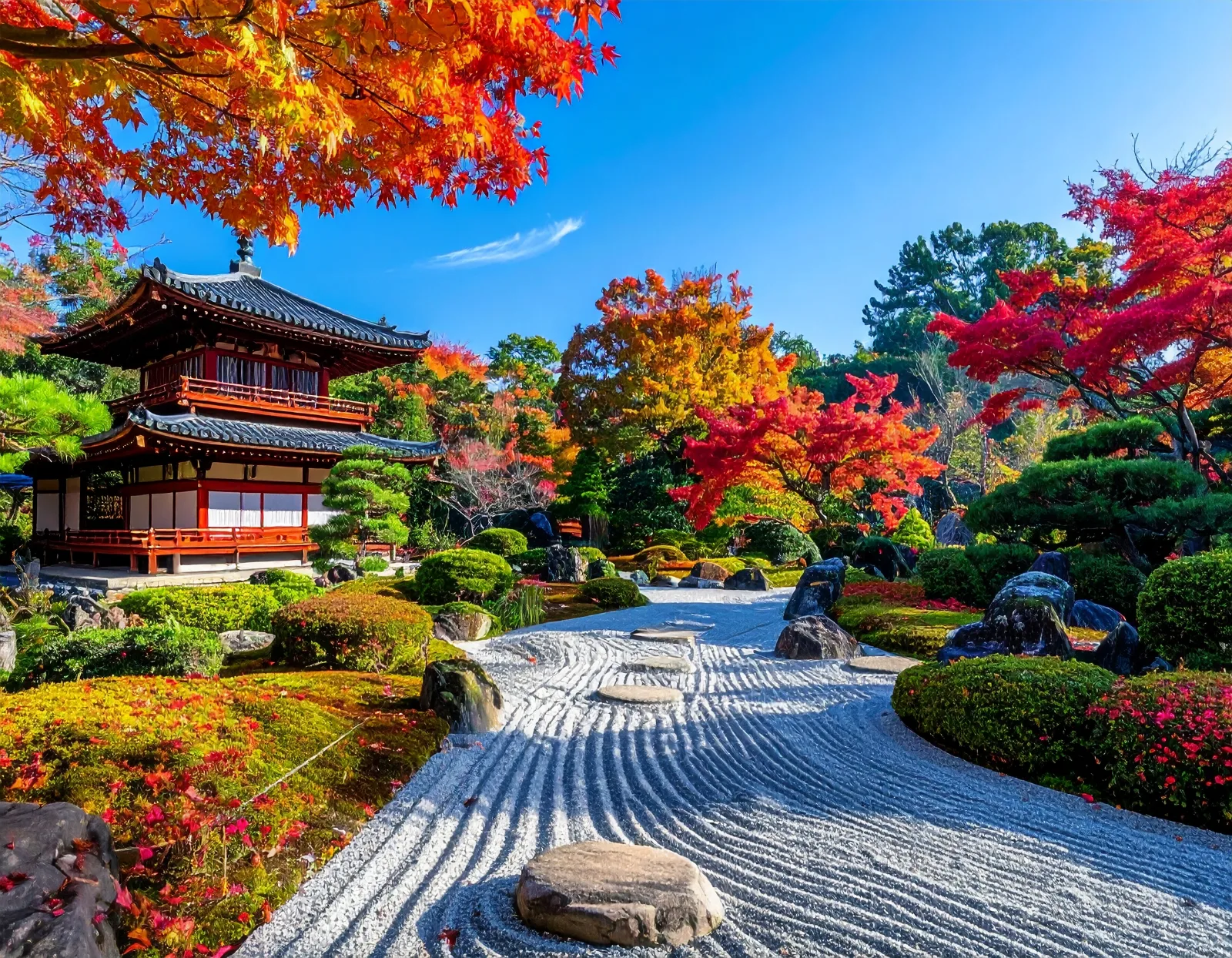
Kansai's other cities each have their own notable gardens -- temple grounds around Nara, strolling gardens in Kobe, castle grounds in Wakayama -- but no single city in the region packs four contrasting styles within such easy reach of each other as Kyoto does. Four Kyoto gardens reward a single day together precisely because none of them look alike. Saihoji, better known as Koke-dera or the Moss Temple, is built around a carpet of over a hundred moss varieties spreading beneath maples and pines. Ryoanji holds Japan's most famous karesansui, a dry rock garden of raked gravel and fifteen stones arranged so that one is always hidden from view. Tofukuji trades stone for color, its Tsutenkyo bridge suspended over a valley that turns deep red and gold in autumn. Ginkakuji, the Silver Pavilion, pairs a sand cone garden with a moss hillside path in the classic Muromachi style. Rather than ranking these four by beauty, the more useful question is how well their styles complement each other in one itinerary -- moss, stone, foliage, and sand, each a different lens on the same tradition.
Public Transit vs. Chartered Bus: How Long It Really Takes to See Several Gardens
Reaching any one of these gardens by public transit is straightforward on its own:
- Saihoji: Kyoto Bus route 73 or 83 from Kyoto Station to the "Koke-dera, Suzumushi-dera" stop, about an hour, then a two- to three-minute walk to the gate (or the Hankyu Arashiyama Line's Kamikatsura Station, a 15-minute walk in the other direction).
- Ryoanji: city bus route 59 from Sanjo-Keihan Station, roughly 40 minutes, or the Randen (Keifuku) Kitano Line's Ryoanji Station, a 7- to 10-minute walk from the gate.
The trouble starts once you add a second or third garden. Waiting for connecting buses and walking between stops eats into the day quickly, and a one-day transit pass -- genuinely good value for a solo traveler or a couple moving at their own pace -- starts to work against a group trying to see several gardens in daylight hours. A chartered bus does not follow a fixed timetable or route, so the order and pacing of stops can be built around the group rather than around a bus schedule.
Getting a Group and a Bus Inside: Parking, Reservations, and Capacity Limits
Each of these gardens has its own rules for groups, and they are worth knowing before the day arrives rather than at the gate:
- Saihoji: advance reservation only, with no walk-in entry. Applications are made by return postcard or online well ahead of the visit, and an application fee applies -- this is a temple-run process, so please confirm the current procedure and fee on Saihoji's official site before applying.
- Tofukuji: parking arrangements for tour buses change during the autumn foliage season, so the drop-off point is confirmed in advance when planning the route.
- Ginkakuji: special viewings may have group-size limits, so larger parties should confirm in advance. Most visitors complete the standard garden viewing in about 30 to 45 minutes.
Working out these reservations, parking assignments, and capacity limits in advance is what keeps a group day running on schedule rather than around it. The entrance fee at each of these gardens buys more than a walk-through: at Saihoji the visit includes a brief temple observance before entering the garden (please check the current format on the official site), and at Ryoanji, Tofukuji, and Ginkakuji it buys unhurried time inside a space designed to be studied slowly rather than passed through -- the difference a raked gravel garden makes when no one is rushing toward the exit.
A One-Day Garden Route Designed for Seniors and Larger Groups
A comfortable route starts by being honest about how long each stop actually takes:
- Tofukuji: the walk around the Tsutenkyo bridge takes about an hour under normal conditions, but on a busy autumn weekend, congestion alone can stretch that wait to two or three hours -- worth building into the schedule rather than discovering on the day.
- Ginkakuji: a shorter stop, with most visitors finishing the garden path in 30 to 45 minutes, which makes it easier to pair with a relaxed lunch stop nearby.
For a group that includes older travelers, spacing these two very different paces apart, adding a seated rest between them, and arranging lunch somewhere within easy walking distance all matter more than trying to add a fifth garden to the day. This kind of pacing is where planning the itinerary around a chartered bus helps: because the route isn't built against a public transit timetable, the time budgeted for each stop can be set generously at the planning stage, well before the day of the visit, rather than squeezed to match a bus schedule -- and the route above is offered as one proposed way to combine the four gardens, not a fixed package. As with any of our itineraries, pricing is arranged as a custom quote based on group size and the exact itinerary rather than a flat rate.
Please note that a Japanese-speaking party leader must accompany the group on board.
When to Visit for the Best Light and the Smallest Crowds
Kyoto's maples typically reach peak color during the autumn foliage season, in the weeks that run from mid-autumn toward the start of winter, and that window is naturally when Tofukuji's walkways are busiest -- the two- to three-hour waits mentioned above are almost entirely a function of timing rather than the garden itself. A few ways to soften that:
- Visit in the early morning, before the main flow of day-trippers arrives -- this noticeably thins the crowds at any of these four gardens.
- Some temples also open for special evening or extended viewing hours by advance reservation during the season, which is worth checking, since these slots tend to be calmer than a midday visit.
For a group traveling together, choosing the right hour of the day does more to protect the experience than choosing the right day of the week -- arrive early, and the same garden that draws a crowd by noon can feel almost private. For more route ideas, browse our sample group itineraries, or request a custom quote for your group.

日本語版
京都の日本庭園を1日で:団体で巡る関西の4つの名園
京都のどの日本庭園を1日で組み合わせるべきか
関西の他の都市にもそれぞれ見応えのある庭園がある----奈良周辺の寺院の庭、神戸の回遊式庭園、和歌山の城郭庭園など。しかし、これほど近い距離に4つの異なる様式の庭園が集まっている都市は、この地域では京都をおいて他にない。京都の4つの庭園を1日で巡る価値があるのは、まさにどれ一つとして似ていないからだ。西芳寺は苔寺として知られ、カエデや松の下に100種類を超える苔の絨毯が広がる庭を中心に造られている。龍安寺は日本で最も有名な枯山水を有し、熊手で整えられた砂利の上に15個の石が、どこから見ても必ず1つは隠れるように配置されている。東福寺は石の代わりに色彩を纏い、通天橋が架かる谷は秋になると深紅と金色に染まる。銀閣寺(慈照寺)は、砂の円錐形の庭と苔むした丘の散策路を組み合わせた、室町時代の古典的様式を今に伝える。この4つを美しさで順位付けするより、むしろ一つの旅程の中でそれぞれの様式がどれだけ互いを引き立て合うかを考える方が有益だろう----苔、石、紅葉、砂。それぞれが同じ伝統を映す異なるレンズなのだ。
公共交通機関 vs. 貸切バス:複数の庭園を見るのに実際どれだけ時間がかかるか
これらの庭園はそれぞれ単独であれば、公共交通機関で行くのは難しくない。西芳寺へは、京都駅から京都バス73系統・83系統で「苔寺・すず虫寺」バス停まで約1時間、そこから山門まで徒歩2〜3分(または阪急嵐山線上桂駅から反対方向に徒歩15分)。龍安寺へは、三条京阪駅から市バス59系統でおよそ40分、または嵐電(京福電鉄)北野線の龍安寺駅から山門まで徒歩7〜10分。
問題が起きるのは、2つ目、3つ目の庭園を加えたときだ。乗り継ぎのバスを待ったり、バス停間を歩いたりする時間はあっという間に1日を食いつぶしてしまう。1日乗車券は、自分のペースで動く一人旅やカップルには確かにお得だが、日中のうちに複数の庭園を見て回ろうとするグループにとっては、かえって足かせになり始める。貸切バスであれば決まった時刻表や経路に縛られないため、停留地点の順序やペース配分をバスの時刻表ではなくグループ側に合わせて組み立てることができる。
グループとバスを庭園に迎え入れる:駐車場、予約、人数制限
これらの庭園にはそれぞれ団体向けの独自のルールがあり、当日ではなく事前に把握しておく価値がある。西芳寺は事前予約制のみで、当日の飛び込み入場は不可。申し込みは往復はがきまたはオンラインで訪問のかなり前に行い、申込料がかかる----これは寺院側が運用する手続きのため、申し込み前に西芳寺の公式サイトで最新の手続きと料金を確認してほしい。東福寺:紅葉シーズンは観光バスの駐車・乗降場所の扱いが変わるため、行程を組む段階で事前に確認します。銀閣寺では、特別拝観に人数の制限がある場合があるため、大人数のグループは事前に確認してほしい。ほとんどの拝観者はこれを30〜45分ほどで見終える。
こうした予約、駐車場の割り当て、人数制限をあらかじめ調整しておくことが、グループの1日を計画通りに進める鍵になる。これらの庭園の入場料は、ただ通り抜けるだけの価値以上のものを含んでいる。西芳寺では、庭園に入る前に短いお勤めの時間があり(現在の形式は公式サイトで確認してほしい)、龍安寺、東福寺、銀閣寺では、さっと通り過ぎるのではなくじっくりと味わうよう設計された空間で、急がずに過ごす時間が含まれている----誰も出口へ急いでいないとき、砂利を熊手で整えた庭がどれほど違って見えるか、その差こそが値打ちだ。
シニアや大人数グループ向けに組んだ1日庭園ルート
快適なルートは、各拠点に実際どれくらい時間がかかるかを正直に見積もることから始まる。東福寺では、通天橋周辺の散策は通常の条件下では約1時間だが、秋の混雑する週末には混雑だけでその待ち時間が2〜3時間に延びることもある----当日になって気づくのではなく、あらかじめスケジュールに織り込んでおく価値がある。銀閣寺は滞在時間が短く、ほとんどの拝観者は30〜45分で庭園の順路を歩き終えるため、近くでのんびりとした昼食休憩と組み合わせやすい。
高齢の旅行者を含むグループにとっては、この2つのペースがまったく異なる拠点の間隔を空けること、その間に座って休める時間を挟むこと、そして徒歩ですぐ行ける範囲で昼食の場所を手配することの方が、5つ目の庭園を無理に1日に詰め込もうとするより大切だ。こうしたペース配分にこそ、貸切バスを軸に旅程を組む利点が生きる。公共交通機関の時刻表に縛られない経路だからこそ、各拠点に充てる時間は、訪問当日ぎりぎりになってバスの時刻に合わせて切り詰めるのではなく、計画段階のうちからゆとりを持って設定できる。なお、上記のルートはこの4つの庭園を組み合わせる一つの提案であり、固定パッケージではない。当社の他の旅程と同様、料金は一律ではなく、グループの人数と具体的な旅程に基づくオーダーメイドの見積もりとして手配する。
なお、ご旅行には日本語を話せる団体代表者の方の同乗が必要です。
最良の光と最も少ない人混みを狙える時期
京都のカエデは通常、晩秋から初冬へ向かう数週間の紅葉シーズンに色づきのピークを迎え、その時期はちょうど東福寺の通路が最も混み合う時期でもある----先述した2〜3時間の待ち時間は、庭園そのものの問題というより、ほぼ完全にタイミングの問題だ。それを和らげるいくつかの方法がある。日帰り客の主な人波が到着する前の早朝に訪れること----これはこの4つの庭園のどこでも、混雑を目に見えて薄めてくれる。また、いくつかの寺院ではこの時期、事前予約制で特別な夜間拝観や延長拝観時間を設けていることもあり、これは確認する価値がある。こうした時間帯は日中の拝観に比べて落ち着いていることが多いからだ。
団体で旅行する場合、曜日を選ぶことよりも、時間帯を選ぶことの方が体験を守るうえでずっと効果がある----早く出発すれば、正午には人混みに包まれるのと同じ庭園が、ほとんど貸し切りのように感じられることもある。ほかの行程例はモデルコースのページで確認でき、グループに合わせたお見積りもご依頼いただける。